
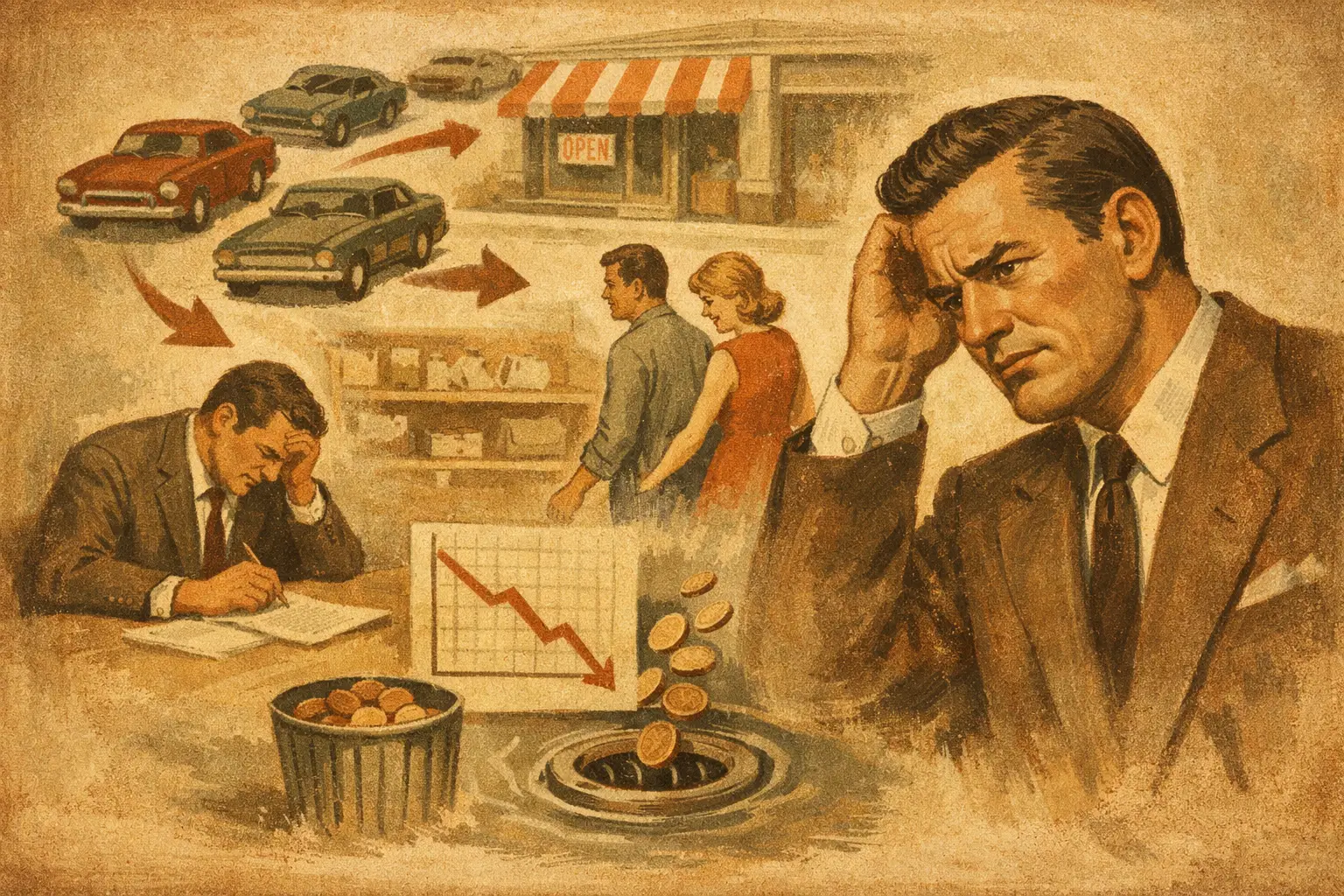
You launched the campaigns. Traffic went up. The dashboard looks busy. And yet leads are weak, sales are flat, and the phone is not ringing the way it should. If you’re asking why traffic not converting, the problem usually is not traffic alone. It’s what happens after the click.
A lot of business owners get stuck here because they assume more visitors should automatically mean more revenue. That sounds logical, but it is not how conversion works. Traffic is only valuable when the message, offer, page experience, and follow-up all line up. If one piece breaks, your website turns into a revolving door instead of a 24/7 salesperson.
Most conversion problems are not mysterious. They are usually a mismatch between what attracted the visitor and what the visitor found after landing on your site.
Maybe your ad promises speed, but the landing page rambles. Maybe your SEO page ranks for a broad term, but the service page speaks to a completely different intent. Maybe the traffic is real, but the visitor is still researching while your page pushes for a hard sale too early. That gap is where conversions die.
This is also why vanity metrics waste time. High impressions, cheap clicks, and rising sessions can look great in a report while revenue goes nowhere. Business owners do not need more charts. They need to know which part of the funnel is leaking and how to stop it.
If someone clicks because of a specific promise, your landing page needs to continue that exact thought. Same problem. Same audience. Same outcome. Same tone.
When that continuity breaks, people hesitate. Hesitation kills conversion. Visitors do not work hard to figure out what you do. They leave.
Not all traffic has the same value. This is where a lot of marketing campaigns quietly fail.
You can have thousands of visits from broad keywords, low-intent social traffic, or loosely targeted ad audiences and still produce almost no pipeline. That does not mean digital marketing failed. It means the targeting is off.
Good traffic is not just volume. It is relevance plus intent. A local service business, for example, does not need random visitors from outside its service area or people looking for DIY advice. It needs prospects with a clear problem and some level of buying intent.
If visitors bounce fast, view one page, and never take a next step, that is a signal. Either they are the wrong audience, or the page is not confirming they are in the right place.
Sometimes the answer is tighter targeting. Sometimes it is better messaging. Often it is both.
Many websites talk about the business instead of the buyer. That is a conversion killer.
Your visitor shows up with one core thought: can you solve my problem, and can I trust you to do it? If your homepage opens with vague brand statements, generic claims, or a wall of text about your company history, you are burning valuable attention.
Clear websites convert better because they remove work. The visitor should know within seconds who you help, what result you deliver, and what to do next.
A lot of businesses try to sound polished and end up sounding empty. Phrases like full-service solutions, innovative strategies, and customized excellence do not move people. They are filler.
Specificity converts. Say what you do. Say who it is for. Say what happens next. If your copy is trying to impress instead of persuade, expect traffic to stall.
Sometimes the site is fine and the traffic is decent, but the offer is weak.
If you want someone to book a call, request a quote, or fill out a form, the value exchange has to feel worth it. Asking for a big commitment too early can tank conversion, especially for colder traffic. On the other hand, a soft offer can underperform if the buyer is already ready to act. This is where nuance matters.
Different traffic sources often need different offers. Paid traffic from a high-intent keyword may respond well to a direct consultation. Top-of-funnel social traffic may need a lower-friction next step first. There is no one-size-fits-all answer.
The mistake is sending every visitor to the same page with the same ask and expecting consistent results.
People do not convert because they understand you. They convert because they believe you.
That means your site needs proof. Real proof. Not inflated claims and not vague testimonials that say things like great service. Buyers want to see signals that reduce risk. They want to know you are credible, active, and capable of delivering the result you promise.
If your traffic is not converting, look closely at your trust stack. Do you show results? Do you make the process feel clear? Do you explain what happens after the form fill? Do you sound like a real operator or like another agency hiding behind jargon?
Some websites look modern but still feel unsafe. Why? Because they avoid direct answers.
If your forms ask for too much information, your calls to action are vague, or your service pages never explain your process, people hold back. Trust is built through clarity, not just design.
You do not need a fancy website. You need one that gets out of the way.
Slow load times, cluttered layouts, weak mobile design, confusing navigation, and popups firing too early can all choke conversion. Most business owners underestimate how fast a visitor gives up. On mobile, it is even worse.
A high-converting page usually does a few things well. It loads fast, makes the value proposition obvious, keeps the next step visible, and removes distractions. That sounds simple because it is. Simple works.
The trade-off is that some businesses try to cram every service, every award, every testimonial, and every menu option onto one page. The result is noise. More information does not always mean more persuasion.
A call to action is not decoration. It is the moment where interest becomes action.
If the button says Learn More, Contact Us, or Submit, do not expect magic. Those are low-energy prompts. They do not tell the visitor what they get or why they should care right now.
At the same time, pushing too hard before the page has earned trust can backfire. If a cold visitor lands on a page and the first thing they see is a demand to book now, that can feel premature.
Good conversion pages match the CTA to buyer readiness. They build enough momentum before asking for action. And when they do ask, the next step feels obvious and low risk.
Here is the part many businesses miss. Sometimes traffic is converting, but the business is failing to close the opportunity.
If leads sit in an inbox for hours, if forms disappear into a black hole, or if the sales follow-up is inconsistent, marketing gets blamed for a sales process problem. That happens all the time.
You need to measure beyond form fills. Look at speed to lead, contact rate, show rate, close rate, and lead quality by source. If you only track traffic and raw conversions, you can misdiagnose the real issue and keep wasting budget.
This is where founder-led, hands-on marketing matters. A serious growth partner does not stop at clicks. They look at the full revenue path.
Start with the basics. Check traffic source quality, then review message match from ad or search term to landing page. Next, look at bounce rate, time on page, mobile experience, form completion rate, and CTA performance. Then go deeper into trust signals, offer strength, and lead handling after submission.
Do not change everything at once. That is how businesses create confusion and learn nothing. Fix the biggest likely leak first.
If your traffic is highly relevant but conversion is weak, start with the page. If the page is solid but lead quality is poor, tighten targeting. If leads are coming in but sales are not moving, inspect your intake and follow-up.
The goal is not more activity. The goal is fewer leaks.
A smart growth strategy connects traffic generation with conversion strategy and sales reality. SEO without page intent alignment underperforms. Paid ads without strong landing pages waste spend. Great content without a clear next step becomes a branding exercise with no business outcome.
That is why businesses plateau. They invest in channels, not systems.
If your traffic is climbing and revenue is not, take that as a warning, not a win. More visitors will not save a broken funnel. Better alignment will.
The upside is this problem is usually fixable once you stop chasing surface metrics and start looking at the buyer journey with brutal honesty. That is where momentum comes from.
A weak website or invisible search rankings are lost opportunities. We turn your traffic into measurable revenue with high-performance digital strategies.
Connect With Our Experts218 Henderson Hwy
Winnipeg, MB, Canada
A weak website, low engagement, or invisible search rankings aren’t just problems—they’re lost opportunities. At QVM, we build high-performance websites, results-driven SEO, and content that actually converts.
Connect and discuss