
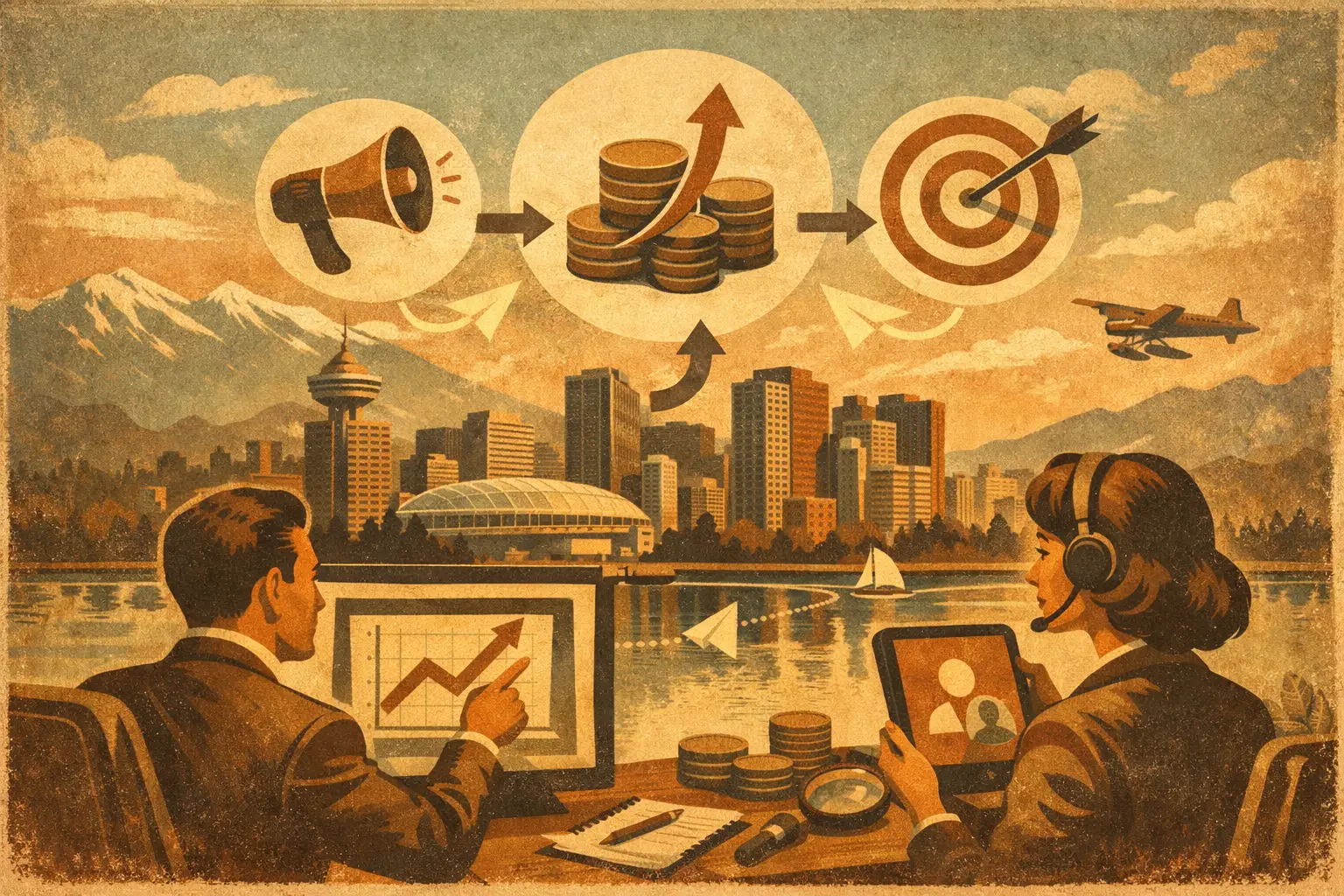
A Vancouver paid ads strategy should not produce a pretty dashboard full of clicks. It should produce qualified calls, booked appointments, form submissions, and sales conversations your team can actually close. If your campaigns are getting attention but not generating revenue, the problem is rarely just the ad. It is usually the strategy connecting audience, offer, landing page, follow-up, and measurement.
Paid media can create traction fast. That is exactly why wasted spend hurts so much. You can burn through a monthly budget in days when campaigns are launched with broad targeting, vague messaging, and a website built to inform rather than convert. The answer is not more activity. It is a tighter system built around what moves the needle.
The goal is not to appear everywhere. The goal is to show up in the right place when a high-value prospect is ready to act, then give that person a clear next step. That sounds obvious, yet many ad accounts are built backward. They start with platform settings and generic audiences instead of starting with the business outcome.
Begin by defining what a valuable lead looks like. For a home service business, it may be a service-area call from someone with an immediate need. For a clinic, it may be a booked consultation that meets intake requirements. For a B2B company, it may be a decision-maker requesting a demo or submitting a detailed quote request. A contact form completion is not automatically a win if the leads are poor fits or nobody can reach them.
Once that definition is clear, every decision becomes easier. Your keywords, audience filters, ad copy, landing-page content, and reporting should all support the same conversion event. This is how you stop treating paid ads as an isolated channel and start using them as a predictable growth engine.
Google Ads is often the strongest starting point when people are actively looking for a solution. Search campaigns put your business in front of prospects who are already typing service-related terms, comparing options, or looking for help now. That intent can be extremely valuable, but it also means the details matter. Loose match types, irrelevant search terms, and poorly organized campaigns can bring in plenty of traffic with very little buying intent.
Social ads serve a different job. Meta, LinkedIn, and similar platforms are useful when the buyer is not searching yet, when your offer needs more education, or when you need to stay visible after someone visits your site. Social can create demand, build trust, and bring warm prospects back into the conversation. It is usually less effective when treated like a search campaign and judged only by immediate form fills.
The right mix depends on your sales cycle. A business with urgent, high-intent demand may lead with search and use remarketing to recover missed opportunities. A business selling a considered service may use paid social to introduce a strong offer, educate prospects, and retarget engaged visitors until they are ready to act. There is no cookie-cutter channel mix that works for every business.
A useful campaign structure separates people based on what they are trying to accomplish. Someone searching for a specific service is not in the same mindset as someone reading general information. Sending both audiences to the same generic page is how ad spend gets diluted.
For search, group terms by service, urgency, and location when it makes sense. Your ads should mirror the language behind the search without stuffing every possible phrase into one headline. Clear relevance wins. If a person is looking for a specific solution, the ad should tell them they have found it, explain why they should take action, and send them to a page built around that exact need.
Negative keywords are equally important. They prevent ads from appearing for searches that are informational, unrelated, or unlikely to turn into revenue. This work is not glamorous, but it protects campaign quality. The search-term report is one of the clearest places to see whether your account is attracting buyers or simply collecting traffic.
For social, targeting should be focused enough to guide the platform without choking off delivery. Start with a clear buyer profile, a compelling angle, and creative that earns attention quickly. Then test messages, not random variations. One ad may lead with speed, another with proof, another with a specific pain point. The lesson should be clear: which message brings in the right people?
An ad can earn the click, but the landing page earns the lead. Sending paid traffic to a cluttered homepage forces visitors to hunt for information. They should not have to figure out what you offer, whether you serve them, or how to get started.
A high-performing landing page makes the offer obvious above the fold. It speaks directly to the visitor’s problem, explains the desired outcome, and gives them one primary action to take. Strong proof matters here. Use credible results, customer outcomes, service details, process clarity, and objections your sales team hears every week.
Keep friction under control. Long forms can make sense for complex B2B inquiries where qualification is essential. They can also crush conversion volume when the offer is simple and the buyer wants a fast answer. The right form length depends on what happens after submission and how much information your team truly needs before making contact.
Speed matters too. Mobile visitors will not wait for heavy pages, confusing navigation, or an unclear call to action. If paid traffic is expensive to acquire, every avoidable second and every unnecessary field becomes a revenue problem.
Click-through rate alone cannot tell you whether a campaign is working. Neither can impressions, reach, or cheap leads. Those numbers may be useful diagnostics, but they are not the finish line.
Track meaningful conversion actions from the start: calls, forms, booked meetings, purchases, chat conversations, and qualified lead stages when your sales process allows it. Use call tracking where phone inquiries matter. Make sure form submissions are recorded correctly. Confirm that tracking fires on the real confirmation event, not merely when someone lands on a page.
Then connect marketing data with what happens after the lead comes in. Which campaigns generate leads that answer the phone? Which ones book? Which ones close? Without that feedback, ad optimization becomes guesswork dressed up as reporting.
This is where many agencies fall short. They send reports full of platform metrics and avoid the uncomfortable question: did the campaign produce business? A serious paid ads partner looks for the answer, even when it reveals a landing-page issue, an offer problem, or a breakdown in follow-up.
Paid ads need active management, but constant changes can make performance worse. If you rewrite every ad, reset targeting, and shift budget every few days, you never give the account enough stable data to teach you anything.
Set a testing plan. Identify the highest-impact variable, form a hypothesis, and make a controlled change. You might test a stronger offer, a more specific landing-page headline, different keyword themes, or a revised qualification question. Give the test enough volume to produce a useful signal, then make the next move based on evidence.
There are times to act quickly. Broken tracking, irrelevant search traffic, a landing page error, or a flood of unqualified calls require immediate attention. But normal performance variation is not a reason to panic. The best results usually come from steady improvement across targeting, creative, conversion rate, and lead quality.
You cannot judge ads separately from sales response time. A high-intent lead who waits hours for a call back may be gone before your team reaches them. That does not automatically mean the ad failed. It means the system failed to capture the opportunity.
Create a clear handoff. Leads should reach the right person quickly, receive a prompt response, and enter a follow-up process that does not depend on someone remembering to check a shared inbox. Track lead disposition so marketing can see the difference between a bad lead, a missed contact, and a genuine sales opportunity.
This is why QVM Digital Marketing treats ads as part of a connected growth system. Traffic, landing pages, tracking, and follow-up all affect the outcome. Fixing only one piece while ignoring the rest is how businesses stay stuck with busy campaigns and weak revenue.
Your next paid ads decision should be simple: do not ask whether you need more clicks. Ask whether every click has a credible path to becoming a customer. Build around that answer, and your campaigns have a real chance to generate momentum instead of more marketing noise.
A weak website or invisible search rankings are lost opportunities. We turn your traffic into measurable revenue with high-performance digital strategies.
Connect With Our Experts218 Henderson Hwy
Winnipeg, MB, Canada
A weak website, low engagement, or invisible search rankings aren’t just problems—they’re lost opportunities. At QVM, we build high-performance websites, results-driven SEO, and content that actually converts.
Connect and discuss