
A phone call from a ready-to-buy customer is worth more than a dashboard full of clicks. That is the real question behind organic traffic vs paid traffic: which channel brings people who actually become leads, customers, and revenue?
Too many businesses treat SEO and paid ads like opposing teams. One agency pushes a long-term content plan while another burns through ad spend chasing quick wins. Then the owner gets reports full of impressions, rankings, and click-through rates, but the sales team is still asking where the qualified leads are.
That is not a traffic problem. It is a strategy problem.
Organic search and paid advertising do different jobs. The strongest growth plans use each channel for what it does best, connect both to a website built to convert, and track outcomes that matter. Not vanity metrics. Not vague promises. Revenue.
Organic traffic comes from unpaid search results. Someone searches for a service, finds your website through Google, and clicks because your page appears relevant and credible. You earn that visibility through SEO, useful content, a technically sound site, local optimization, and authority built over time.
Paid traffic comes from advertisements. You pay to place an offer in front of people through search ads, social ads, display campaigns, video, or other platforms. It can put your business in front of buyers quickly, often within days of launching a campaign.
The key difference is control versus compounding value.
Paid ads give you more immediate control. You can choose the audience, location, message, timing, and landing page. If demand exists and the campaign is built correctly, you can generate leads fast. But when you stop funding the campaign, the traffic stops with it.
Organic traffic takes longer to build because Google needs evidence that your business deserves visibility. The upside is substantial: high-performing pages can keep producing qualified traffic month after month without paying for every single click.
Neither channel is automatically better. The right choice depends on your sales cycle, market demand, budget, website strength, and how urgently you need pipeline.
Paid traffic is built for speed. If you have a proven service, a clear offer, and a website or landing page that can convert, ads can create fast, predictable growth.
This matters when a business needs leads now. Maybe you are launching a new service, filling a seasonal demand window, expanding into a new market, or trying to give your sales team more conversations this month. SEO will not solve an immediate pipeline gap by itself. Paid search can put you in front of people actively looking for what you sell.
Paid campaigns also generate useful market intelligence. You can test which offers earn clicks, which headlines get calls, which service terms attract qualified prospects, and which locations convert best. Done right, that data makes your broader marketing smarter.
But ads are unforgiving when the foundation is weak. Sending paid clicks to a slow, confusing website with generic copy is a fast way to waste budget. The ad platform still gets paid. Your business still has no leads.
Before increasing spend, get the basics right: a focused landing page, a clear call to action, credible proof, fast page speed, accurate tracking, and a real process for following up with inquiries. An ad campaign cannot fix an offer nobody wants or a sales process that ignores leads for two days.
Organic traffic is the better long game when customers regularly search for the problems you solve. Service businesses, professional firms, healthcare practices, home service companies, and B2B providers can all benefit from showing up when demand already exists.
A well-executed SEO strategy does more than chase rankings. It creates pages that answer buyer questions, explains your services clearly, strengthens trust, and captures high-intent searches. A person searching for a specific service in their area is not casually browsing. They may be close to making a decision.
Organic visibility also builds credibility. People often trust businesses that appear consistently in search results, especially when their website is useful, polished, and easy to navigate. Ranking is not just about traffic. It is a signal that your company is established enough to be found.
The trade-off is patience. SEO does not work on a fixed deadline, and anyone promising instant first-page dominance is selling fiction. Competitive markets take sustained work. Search algorithms change. Content needs to be better than thin, recycled pages that say the same thing as everyone else.
Still, the value compounds. A page that ranks for a high-intent service search can drive leads long after it is published. That makes organic traffic a powerful asset, not simply another monthly expense.
The smarter question is not whether to choose SEO or paid ads. It is how to use each one without wasting time, effort, or budget.
Paid ads can capture demand while SEO builds the asset that reduces your dependence on paid clicks over time. Meanwhile, SEO insights can improve ads. If a service page earns strong organic engagement and generates calls, that messaging may be an excellent starting point for a paid campaign. If ads reveal that one service or audience converts far better than another, that can guide future content and SEO priorities.
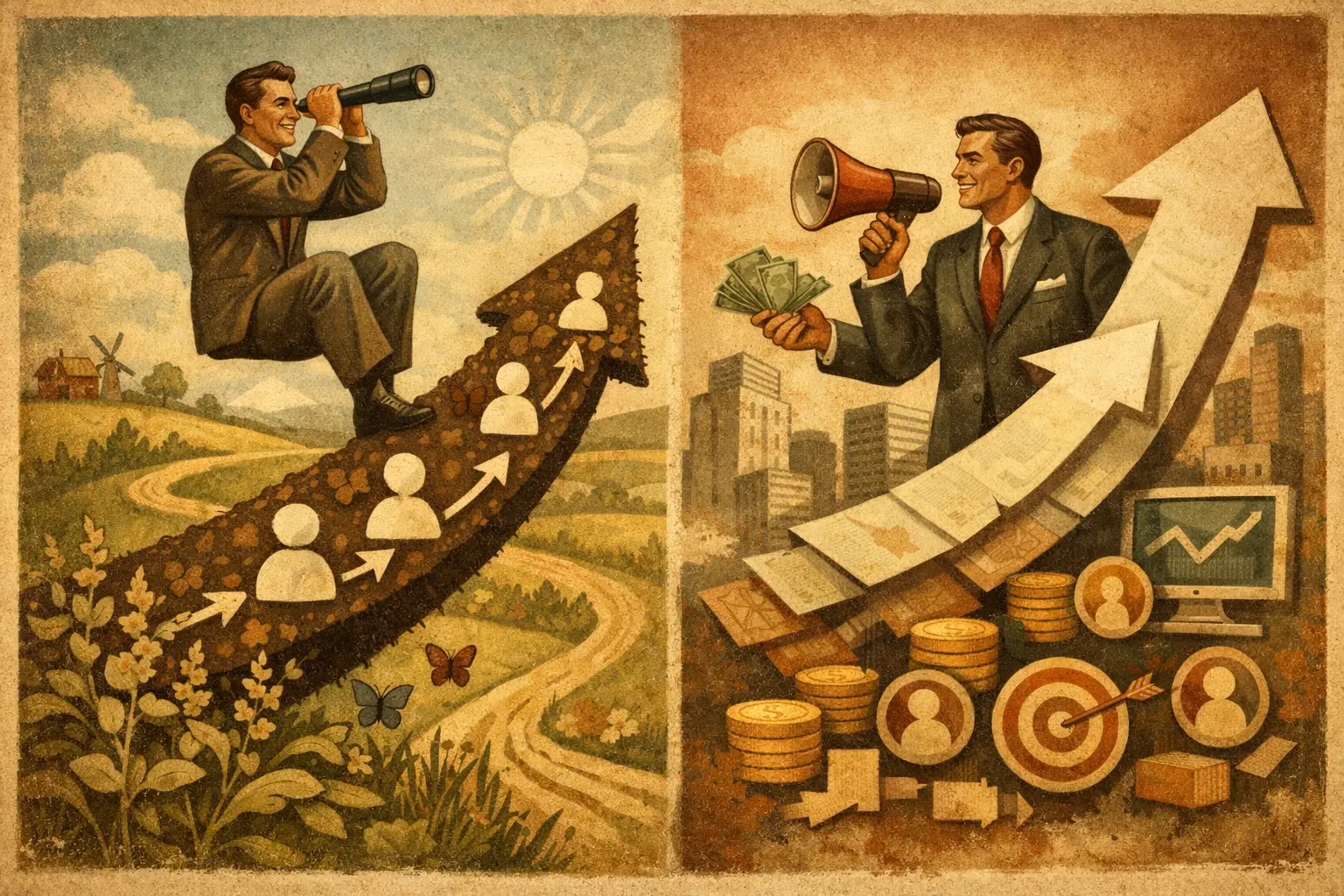
Think of paid traffic as an accelerator and organic traffic as equity. One helps you move now. The other helps you build something that keeps working.
That does not mean splitting resources evenly. If your business has a new website, no search visibility, and an urgent need for leads, paid advertising may deserve more attention first. If you are already getting leads from referrals but want to build a durable acquisition channel, SEO may be the higher priority.
Your mix should change as your data changes. A growth strategy is not a set-it-and-forget-it checklist.
The biggest mistake in organic traffic vs paid traffic is comparing surface-level numbers. A hundred paid clicks are not better than 40 organic visitors if those 40 visitors produce more booked calls, quote requests, or sales. More traffic means nothing if it is the wrong traffic.
Measure the full path from visit to revenue. Track qualified form submissions, phone calls, booked appointments, cost per qualified lead, lead-to-sale rate, and revenue by channel. If possible, connect marketing data to your CRM so you can see what happens after a lead enters the pipeline.
This is where many businesses get misled. An agency may celebrate lower cost per click while ignoring the fact that those clicks never turn into customers. Or it may celebrate ranking for a broad keyword that attracts people with no intention of buying.
Ask tougher questions. Which channel produces the highest-quality leads? Which service pages create real inquiries? Which campaigns drive sales, not just traffic? Where do prospects drop off? What happens when someone lands on your site after clicking?
The answers may expose a website issue, weak messaging, poor targeting, or a follow-up problem. Good marketing does not hide those gaps behind a pretty report. It identifies them and fixes them.
Traffic is only the first step. Your website needs to act like a 24/7 salesperson, not a digital brochure that forces visitors to hunt for basic information.
A conversion-ready website makes the offer obvious. It speaks directly to the customer problem, explains why your business is the right fit, provides proof, handles common objections, and gives visitors a simple next action. That action might be calling, requesting a quote, booking a consultation, or completing a short form.
Organic visitors and paid visitors should not always see the same page. A person who clicks an ad for a specific service should land on a page built around that exact need. A person arriving from an informational search may need education and trust-building before they are ready to contact you.
This is not extra polish. It is the difference between paying for attention and turning attention into opportunity.
If you need immediate lead volume and have a proven offer, paid traffic can create momentum quickly. If you want lasting visibility and lower reliance on paid acquisition over time, organic traffic deserves sustained investment. If you want to grow without guessing, use both and let conversion data decide where to press harder.
Stop asking which channel is cheaper in a vacuum. Ask which one produces profitable customers, what it takes to improve that result, and whether your website is ready to do its job. The businesses that win are not the ones with the most clicks. They are the ones that turn attention into measurable growth.
A weak website or invisible search rankings are lost opportunities. We turn your traffic into measurable revenue with high-performance digital strategies.
Connect With Our Experts218 Henderson Hwy
Winnipeg, MB, Canada
A weak website, low engagement, or invisible search rankings aren’t just problems—they’re lost opportunities. At QVM, we build high-performance websites, results-driven SEO, and content that actually converts.
Connect and discuss