
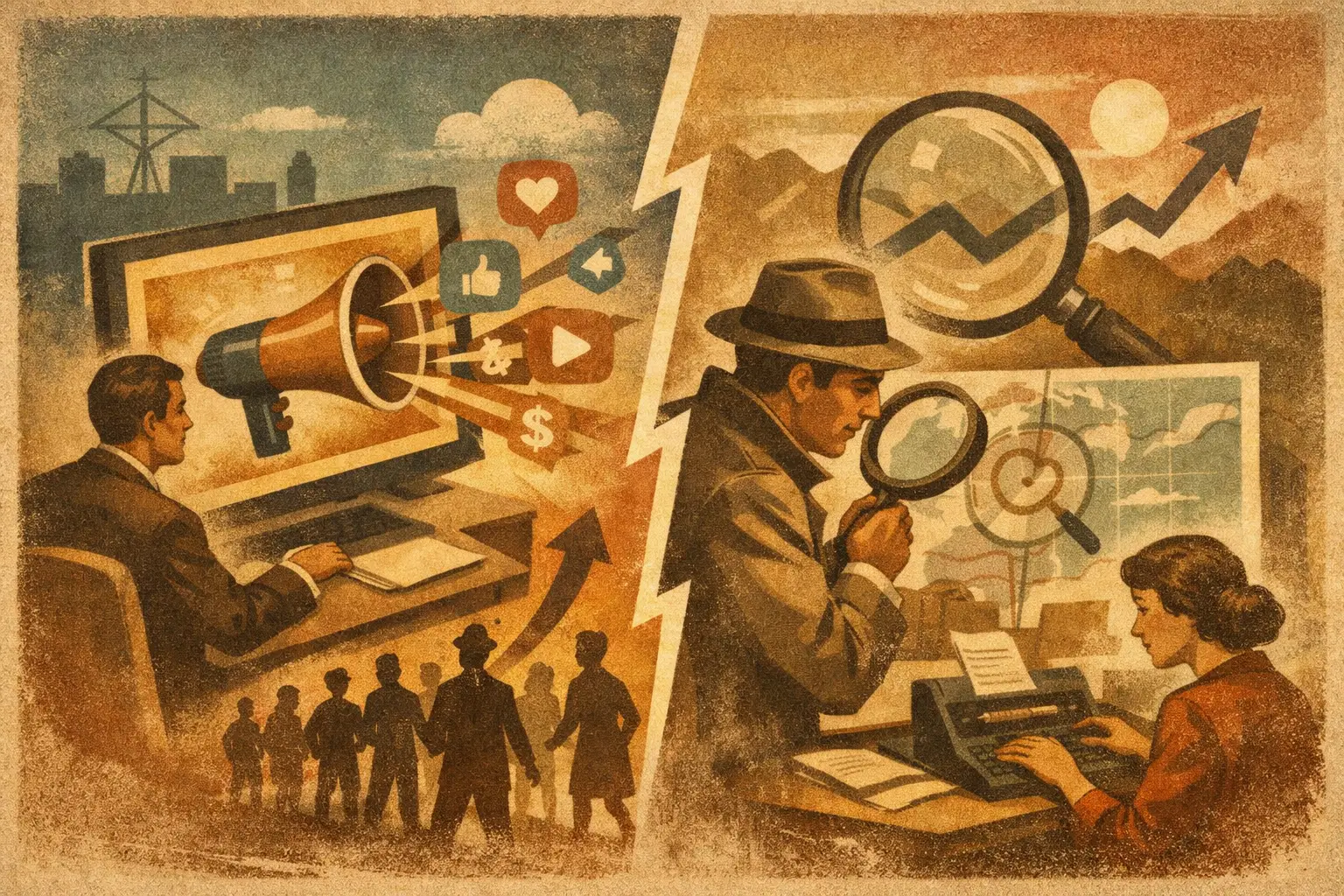
A slow month exposes weak marketing fast. Your phone goes quiet, form fills dry up, and suddenly every marketing channel gets put on trial. The question is usually Facebook ads or SEO – which one will produce leads that turn into actual revenue?
The blunt answer: neither channel is automatically better. Facebook Ads can create demand quickly. SEO can build a compounding stream of high-intent traffic. But sending either type of traffic to a weak website, vague offer, or broken follow-up process is how businesses end up with reports full of clicks and a sales team full of excuses.
The right choice depends on what you sell, how quickly you need traction, and whether your business is prepared to convert attention into appointments, calls, and sales.
The biggest difference is not the dashboard. It is the mindset of the person seeing your message.
With SEO, people are actively looking. A prospect searching for a local service, a solution to a costly problem, or a provider they can trust has already raised their hand. They may still compare options, but the intent is there. Your job is to show up with a page that answers the question better than anyone else and gives them a clear next step.
Facebook Ads work differently. Most people are not opening Facebook because they planned to buy your service that morning. You are interrupting a scroll with an offer, problem, outcome, or piece of proof strong enough to earn attention. That makes Facebook powerful for businesses with visual results, compelling transformations, limited-time promotions, and services people may not realize they need until they see the right message.
That distinction matters. Search captures demand. Facebook helps create and shape demand.
If a homeowner searches for emergency water damage restoration, SEO targets a high-intent moment. If a homeowner sees a before-and-after renovation video and realizes their outdated kitchen is holding them back, Facebook can create the conversation before a search ever happens.
Facebook Ads are built for speed, testing, and reach. A focused campaign can put a clear offer in front of the right audience quickly, which makes it useful when you need lead flow now instead of months from now.
It is often the stronger first move when your offer is easy to understand and your audience can be identified by interests, behaviors, location, life events, or engagement. Think aesthetic services, fitness programs, home improvement, events, retail promotions, coaching, and businesses with strong visual proof. A great video, testimonial, or transformation can do more work than a generic ad that simply says, “Contact us today.”
Facebook also gives you room to test. You can test different hooks, offers, creative, landing pages, and calls to action without waiting for a page to earn search visibility. That feedback is valuable. It tells you which pain points get a response and which promises fall flat.
But fast does not mean automatic. Facebook can burn through spend when the offer is weak, the targeting is lazy, or the lead process is slow. A campaign might generate form submissions, yet those leads may be curious rather than committed. If nobody calls quickly, qualifies properly, and follows up more than once, the campaign gets blamed for a sales process problem.
“Learn more about our services” is not an offer. It is a soft invitation with no reason to act.
A stronger campaign gives people a concrete reason to respond: a consultation tied to a specific outcome, an assessment that identifies a costly issue, a limited availability service window, or proof that makes the result feel believable. The best ads do not try to explain everything. They earn the next click, then let the landing page and follow-up process do the heavy lifting.
SEO is the smarter long-term play when prospects already use search engines to find what you sell. It is especially effective for service businesses where demand is driven by a clear problem, location, urgency, or purchase intent.
Someone searching “roof repair near me,” “commercial cleaning company,” or “family dentist accepting new patients” is not casually browsing. They are looking for a solution. That is valuable traffic because the search itself tells you what they want.
SEO takes longer because search visibility must be earned. Your website needs useful pages, technical health, local relevance where applicable, strong content, clear service positioning, and evidence that your business deserves to rank. There is no honest shortcut around that work.
The upside is that a well-built SEO system keeps working. A high-performing service page can generate qualified traffic day after day without needing a fresh campaign every morning. That creates leverage. Instead of renting every visit, you build an asset that can produce leads over time.
Too many businesses treat SEO like a collection of disconnected tasks: add keywords, publish a few blogs, send a monthly report, repeat. That may create activity, but activity is not the same as growth.
SEO should start with revenue opportunities. Which services produce the best customers? Which searches signal urgency? Which pages are missing? Where are visitors dropping off? A strategy built around those answers is far more useful than chasing traffic for broad terms that bring in people who will never buy.
Traffic is not the finish line. Qualified traffic that converts is.
Here is the part agencies often skip because it requires more work: ads and SEO cannot rescue a website that does not sell.
Your website is your 24/7 salesperson. It needs to make the offer obvious within seconds, establish trust, answer objections, show proof, and direct visitors toward one clear action. If visitors land on a cluttered homepage, cannot tell what makes you different, or have to hunt for a way to contact you, more traffic only magnifies the leak.
For Facebook traffic, create landing pages that match the ad message exactly. If the ad promises a specific assessment or outcome, the page should continue that conversation without sending people on a scavenger hunt through your navigation.
For SEO traffic, build pages around the searcher’s actual question. A service page should explain who the service is for, what problem it solves, what the process looks like, why your business is credible, and how to take the next step. Do not force every searcher onto a generic homepage and hope they figure it out.
Choose Facebook Ads first when you need faster market feedback, have a strong offer, and can follow up on leads immediately. It is a practical way to generate momentum while you learn which messages and audiences respond.
Choose SEO first when your buyers are already searching for your services, your sales cycle rewards high-intent leads, and you want a durable lead source that compounds. It requires patience, but it can reduce your dependence on constantly feeding an ad account.
For many established businesses, the strongest answer is not Facebook ads or SEO. It is sequencing them properly. Use ads to create immediate opportunities and test positioning. Use those insights to sharpen website pages and content. Build SEO so your future lead flow is not dependent on turning paid campaigns on every time sales dip.
That does not mean blindly running both channels. If your website cannot convert, fix that first. If your team cannot respond to a lead within a reasonable window, repair the follow-up process. If your offer sounds exactly like everyone else’s, clarify the value before buying traffic.
Clicks, impressions, reach, rankings, and cost per lead all have a place. None of them pays the bills by itself.
Track where leads came from, how quickly they were contacted, how many qualified, how many booked, and how many became customers. That is how you spot the real bottleneck. You may find that Facebook generates more inquiries while SEO produces a higher close rate. Or that SEO traffic is strong but your service pages are losing visitors before they call.
The goal is not to declare a winner based on vanity metrics. The goal is to build a system that produces predictable revenue.
If you need a quick gut check, ask one question: are you trying to capture people who are already looking, or put a persuasive offer in front of people who should be looking? Your answer points toward SEO or Facebook Ads. Then make sure the rest of your marketing is ready to turn that attention into a sale.
A weak website or invisible search rankings are lost opportunities. We turn your traffic into measurable revenue with high-performance digital strategies.
Connect With Our Experts218 Henderson Hwy
Winnipeg, MB, Canada
A weak website, low engagement, or invisible search rankings aren’t just problems—they’re lost opportunities. At QVM, we build high-performance websites, results-driven SEO, and content that actually converts.
Connect and discuss