
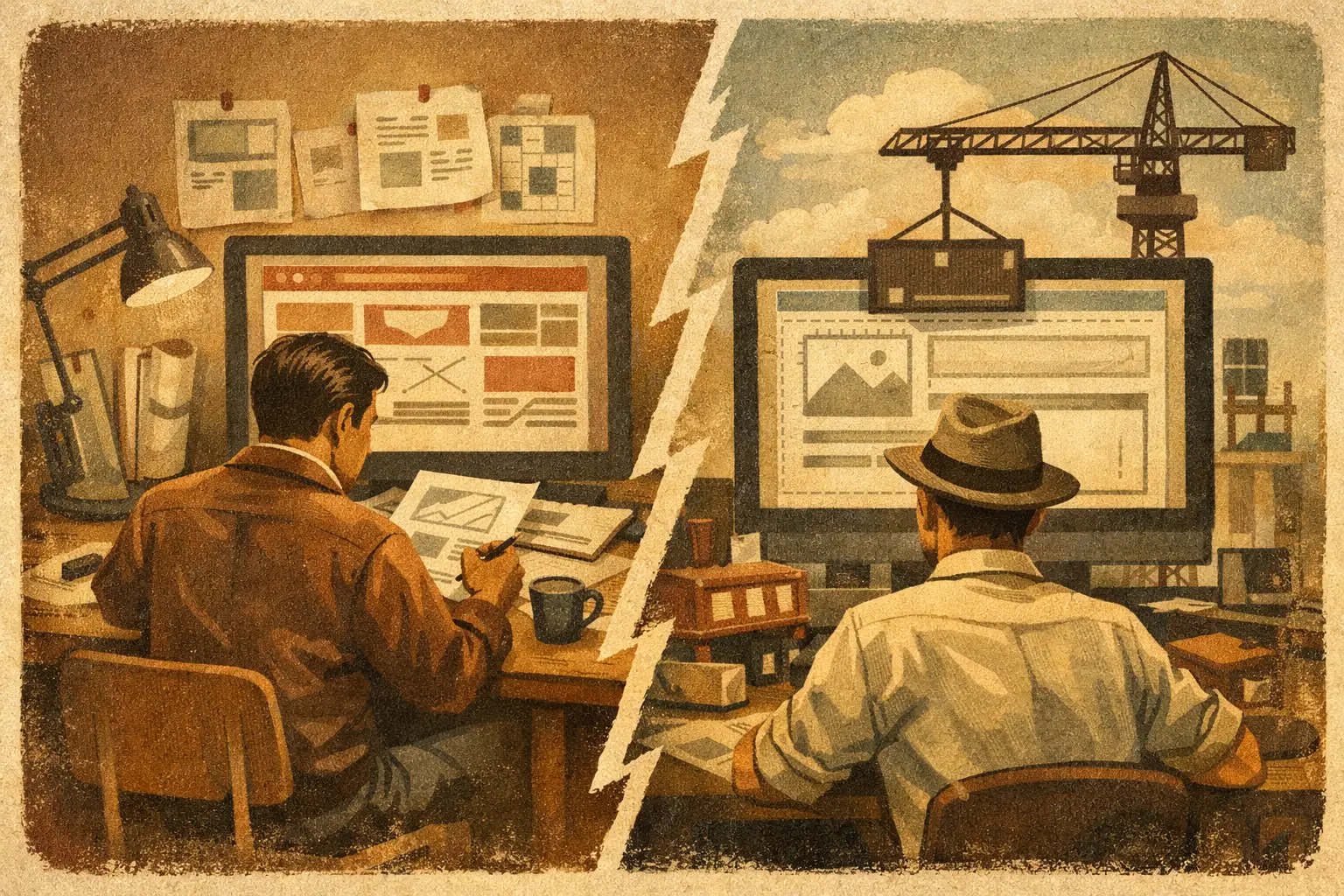
Your site does not need to win design awards. It needs to turn the traffic you already pay for into calls, form fills, booked appointments, and sales. That is why the website redesign vs new website decision matters. Choose wrong, and you can spend months polishing a broken sales process. Choose right, and your website becomes the 24/7 salesperson it was supposed to be.
The blunt truth: a fresh coat of paint will not fix slow pages, confusing navigation, weak messaging, broken tracking, or a site built on a platform your team cannot manage. On the other hand, rebuilding a site that only needs targeted conversion work can waste time and throw away SEO equity you have already earned.
This is not a design preference. It is a business decision based on what is underneath the site, how customers use it, and what is stopping it from producing revenue.
Business owners often arrive with the same diagnosis: “Our website looks outdated.” Sometimes they are right. More often, “outdated” is shorthand for a bigger frustration: leads are down, ad traffic is not converting, the site is hard to update, or the business has outgrown the message that got it this far.
A redesign improves the existing structure. It may update branding, reorganize pages, sharpen copy, improve mobile experience, and add stronger conversion paths while preserving the core platform and URL structure.
A new website starts with a clean foundation. It rebuilds the architecture, technology, content strategy, tracking setup, and user journey. It is the better call when the current site has structural issues that cannot be solved with a few new sections and better visuals.
Neither option is automatically better. The right one is the one that removes the barriers between a qualified visitor and the action you need them to take.
See how a strategic website approach can support business growth in the EinkTab case study.
A redesign makes sense when the bones are solid but the performance is weak. Your site may have decent authority in search, a stable content management system, clear service pages, and a URL structure that customers and search engines already understand. The problem is how that foundation is presented and optimized.
For example, a service business may have a site that ranks for relevant local searches but buries its contact options, uses generic headlines, and forces mobile visitors through a long, clumsy form. Replacing the visual system, rewriting key pages, simplifying navigation, adding proof, and tightening calls to action can make a major difference without starting from zero.
A redesign is usually the right move when:
The key word is usually. A redesign should not be cosmetic. If the home page gets a new color palette but your service pages still answer the wrong questions, your forms still fail on mobile, and nobody can tell what makes you the right choice, you bought decoration, not growth.
A serious redesign starts with conversion friction. What do visitors see first? Is the value proposition clear in seconds? Can they find the service they need without hunting? Does each page give them a logical next step?
It also looks at trust. Prospects want evidence before they contact a business. Specific outcomes, relevant case examples, process clarity, strong brand consistency, and direct answers to common objections do more work than vague claims about quality.
Finally, a redesign should clean up measurement. If you cannot see which channels create phone calls, booked consultations, quote requests, or sales, you are running marketing with the dashboard covered. Better tracking lets you identify where leads come from and what pages are doing the heavy lifting.
There is a point where redesigning is just putting better paint on a building with bad wiring. If the platform is outdated, the page structure is chaotic, the site is full of duplicate or thin content, or integrations keep breaking, a new website is often the faster path to a reliable sales engine.
A full rebuild is especially compelling after a major business shift. Maybe you have expanded into new services, changed your ideal customer, added locations, moved from one-off projects to recurring work, or repositioned the brand. If the old site tells the story of a business you no longer are, patching it page by page creates confusion.
You should strongly consider a new website if the current one has four or more of these issues:
A new build gives you the chance to create the right architecture from day one. That means mapping pages around how people actually search and buy, building conversion points into the journey, establishing clean technical standards, and making sure every marketing channel lands visitors on a page built to continue the conversation.
Business owners are right to worry about SEO during a rebuild. A careless migration can erase rankings, break valuable links, create dead pages, and cause search visibility to slide. But the answer is not to keep a failing website forever.
The answer is a disciplined migration plan. Before rebuilding, identify pages that drive traffic, leads, backlinks, and branded searches. Preserve strong content where it still serves users. Map old URLs to the most relevant new URLs. Carry over metadata where appropriate, test redirects, submit the updated site correctly, and monitor performance after launch.
SEO should shape the rebuild, not be bolted on at the end. When it is handled properly, a new website can protect existing value while creating room for better content, cleaner structure, faster performance, and stronger conversion rates.
A polished mockup can make almost any project feel like progress. That is exactly why so many businesses end up with a beautiful site that still does not pull its weight.
Before choosing a redesign or new website, look at the numbers. Review traffic by channel, conversion rates by device, top landing pages, form completion rates, call volume, page speed, and where visitors drop off. Then pair that data with real customer feedback. Sales teams and front-desk staff often know the questions prospects keep asking because the site never answered them.
Ask a harder question, too: does the website reflect how you actually sell? If your sales process depends on speed, expertise, clear outcomes, or a highly specific service experience, the site needs to prove those points before a prospect ever reaches out.
The best decision is rarely about what your site needs this week. It is about whether it can support your next growth move without becoming another bottleneck.
If paid ads are bringing traffic, the landing experience needs to match the promise in the ad. If SEO is a priority, the site needs a structure that supports service pages, location relevance where appropriate, useful content, and clean technical performance. If your brand is evolving, every page needs to reinforce the same positioning instead of sending mixed signals.
That is why websites should not be treated as isolated projects. Your traffic generation, content, ads, brand, and conversion strategy all meet on the site. When one piece is disconnected, lead quality drops and your team spends more time chasing opportunities that should have been qualified before the first call.
If the foundation is healthy, preserve what works and redesign with intent. If the foundation is holding back marketing, rebuild it properly instead of endlessly patching it. The goal is not to launch something “new.” The goal is to create a website that makes it easier for the right people to understand your value, trust your business, and take action.
Start by auditing the pages and channels that already create opportunity. The answer will become clearer once you stop judging the site by how it looks and start judging it by what it produces.
Get a quick estimate for your website project through our Website Instant Quote service.
A weak website or invisible search rankings are lost opportunities. We turn your traffic into measurable revenue with high-performance digital strategies.
Connect With Our Experts218 Henderson Hwy
Winnipeg, MB, Canada
A weak website, low engagement, or invisible search rankings aren’t just problems—they’re lost opportunities. At QVM, we build high-performance websites, results-driven SEO, and content that actually converts.
Connect and discuss