
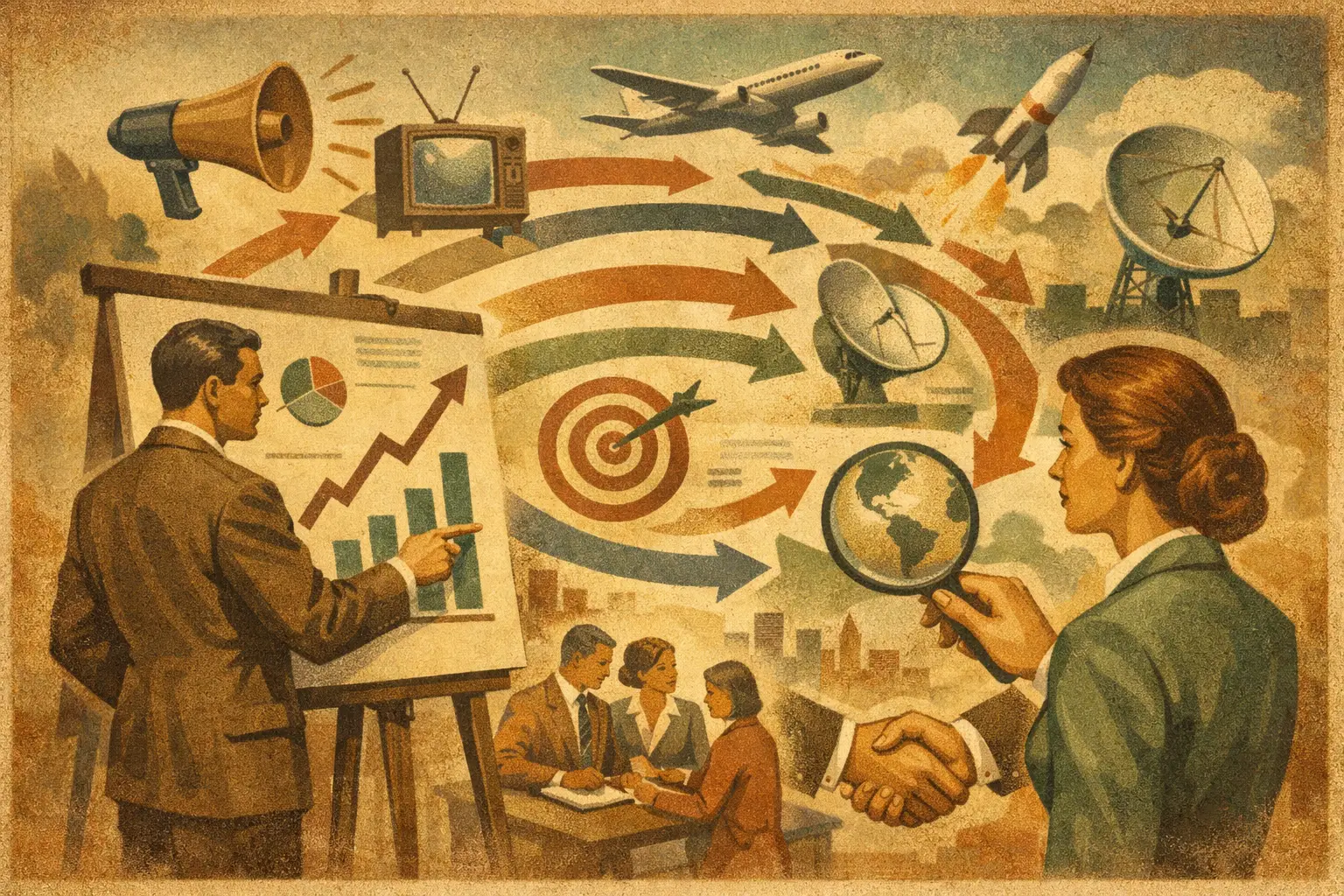
Most businesses do not have a traffic problem. They have a disconnected marketing problem.
That is exactly why an integrated marketing plan for predictable growth matters. If your SEO team is chasing rankings, your ad campaigns are driving cold clicks to weak landing pages, and your social content has no connection to what sales needs, you are not building momentum. You are paying for activity. Predictable growth comes from getting every marketing channel to do one job together – attract the right people, convert them, and move them closer to a sale.
Let’s strip the fluff out of it.
An integrated marketing plan for predictable growth is a system where your website, SEO, paid ads, content, social media, branding, and conversion strategy are built to support the same revenue goal. Not separate campaigns. Not random deliverables. One plan, one direction, one scoreboard.
A lot of businesses get stuck because they buy marketing like a menu. A little SEO here. Some Google Ads there. A website redesign every few years. Social posts when someone remembers. Then they wonder why lead flow is inconsistent.
The problem is not effort. The problem is fragmentation.
Predictable growth happens when each channel knows its role. Paid ads create speed. SEO builds long-term visibility. Content answers objections before sales has to. Your website acts like a 24/7 salesperson. Social proof reinforces trust. Branding keeps the message clear, so prospects do not get confused halfway through the buying process.
If one piece breaks, performance drops across the board.
Most plans are built backward.
They start with tactics instead of outcomes. A business says it wants more leads, then jumps straight into ad spend, blog content, or posting three times a week on social media. None of that means much if you have not defined what kind of lead you want, what action you want them to take, and what happens after they land on your site.
The second issue is bad measurement. Too many agencies hand over reports full of impressions, clicks, and engagement numbers that look busy but do not explain revenue. Business owners are left asking the same question every month: is this actually working?
That question should never be hard to answer.
A serious growth plan measures what moves the business. Qualified traffic. Conversion rate. Cost per lead. Sales pipeline quality. Close rate. Customer value. Those are the numbers that tell you whether your marketing is helping you grow or just burning time and budget.
The third issue is timing. SEO takes time. Paid ads move faster. Website fixes can improve conversion almost immediately. Content compounds if it is aligned to search demand and buyer objections. If you expect every channel to perform on the same timeline, you will make bad decisions too early.
A working plan starts with the offer and the audience.
If your positioning is weak, no channel can save you. You need to know who you want to reach, what problem you solve, why they should trust you, and what makes your business the obvious next step. That message has to show up consistently in your ads, your website copy, your service pages, your email follow-up, and your sales conversations.
Next comes traffic strategy.
This is where businesses usually split into two camps. One wants fast lead flow now. The other wants sustainable growth over time. The truth is, most companies need both. Paid ads can give you immediate data and faster opportunities. SEO can lower dependence on paid traffic and build authority over time. Content supports both by answering real search intent and giving prospects a reason to stay engaged.
Then comes conversion strategy, which is where a lot of money gets wasted.
Sending traffic to a weak website is like pouring water into a bucket with holes in it. If your homepage is vague, your service pages are thin, your calls to action are buried, or your forms create friction, more traffic will not fix the problem. It will just expose it faster.
Your website needs to do three things well. It needs to make the value clear in seconds, guide visitors to the right action, and remove doubt with proof. That proof can come from results, process clarity, testimonials, before-and-after examples, or industry-specific trust signals. If the site cannot sell when you are asleep, it is not doing its job.
The word predictable matters here.
Any business can get a short-term bump. Run a promotion, increase ad spend, send an email blast, and you may see temporary lift. Predictable growth is different. It means your lead flow is not based on luck, seasonality, or one campaign that happened to work once.
To build that kind of consistency, you need a plan that connects short-term wins to long-term compounding.
If you want more leads, define how many. If you want more sales, define the revenue target. Then work backward.
How many qualified leads do you need to close that amount of business? What is your current close rate? What conversion rate does your site need to produce? How much traffic is required to hit those numbers?
This is where marketing stops being vague and starts becoming operational.
When every channel is expected to do everything, none of them perform well.
Paid ads are strong when you need speed, testing, and quick visibility on high-intent searches. SEO is strong when you want durable inbound traffic that compounds over time. Content helps you rank, educate, and build trust before a sales call ever happens. Social media can support credibility and retargeting, but for many businesses it should not be treated as the main growth engine unless the audience truly buys that way.
That last part matters. Not every channel deserves equal investment. It depends on your market, your margins, your sales cycle, and how your buyers make decisions.
A good-looking site that does not convert is an expensive brochure.
Your pages should answer the questions buyers care about fast. What do you do? Who do you help? Why should they choose you? What should they do next? If those answers are buried under generic copy and oversized design trends, you are losing deals.
This is where founder-led, hands-on strategy makes a difference. Cookie-cutter websites tend to look polished while saying nothing. A conversion-focused site is sharper. It is built to move visitors toward action.
Predictable growth requires visibility.
If lead volume drops, you need to know whether the issue came from traffic, conversion rate, lead quality, follow-up speed, or sales execution. Without that visibility, businesses make emotional decisions. They cut the wrong channel, panic over the wrong metric, or keep spending because the dashboard looks busy.
Good reporting is not about more charts. It is about seeing the bottleneck clearly enough to fix it.
The best gains often come from the places where channels overlap.
An SEO page that ranks well but does not convert needs stronger messaging and better calls to action. A paid ad campaign with a high click-through rate but weak lead quality may be promising the wrong thing. Social content that gets attention but does not support your offer may be entertaining people who were never going to buy.
This is why disconnected specialists often miss what is right in front of them. Each one can point to effort. Few can connect the full journey from click to customer.
An integrated plan fixes that. It forces the strategy to answer one question at every step: does this help generate qualified leads and sales?
If the answer is no, it should be changed or cut.
A business wants steady lead flow, not feast-or-famine months. The fast move is often paid search targeting high-intent buyers. But if those clicks hit a weak page, cost per lead climbs. So the landing page gets rebuilt around a stronger offer, clearer proof, and tighter conversion paths.
At the same time, SEO content is built around the exact problems those buyers are searching for, which creates a pipeline of organic traffic that grows over time. Retargeting keeps the business visible to visitors who were interested but not ready. Social proof is used to reduce hesitation. The brand message stays consistent across every touchpoint, so people are not getting one promise in an ad and a different story on the website.
That is integration. Not complexity for its own sake. Just a smarter path from attention to revenue.
QVM Digital Marketing approaches growth this way because disconnected marketing does not move the needle for serious businesses. If you want results you can track, the plan has to work as one system.
It is not automatic, and it is not instant.
You still need testing. You still need to adjust messaging, offers, pages, and targeting. Some channels will pull harder than others depending on your industry and stage of growth. But once the pieces are connected, optimization gets easier because you are improving a system, not guessing across isolated tactics.
That is the difference most businesses feel almost immediately. Less confusion. Better data. Fewer random acts of marketing. More traction you can explain.
If your marketing feels busy but your growth feels shaky, the answer is probably not more activity. It is a tighter plan with every channel pulling in the same direction.
A weak website or invisible search rankings are lost opportunities. We turn your traffic into measurable revenue with high-performance digital strategies.
Connect With Our Experts218 Henderson Hwy
Winnipeg, MB, Canada
A weak website, low engagement, or invisible search rankings aren’t just problems—they’re lost opportunities. At QVM, we build high-performance websites, results-driven SEO, and content that actually converts.
Connect and discuss